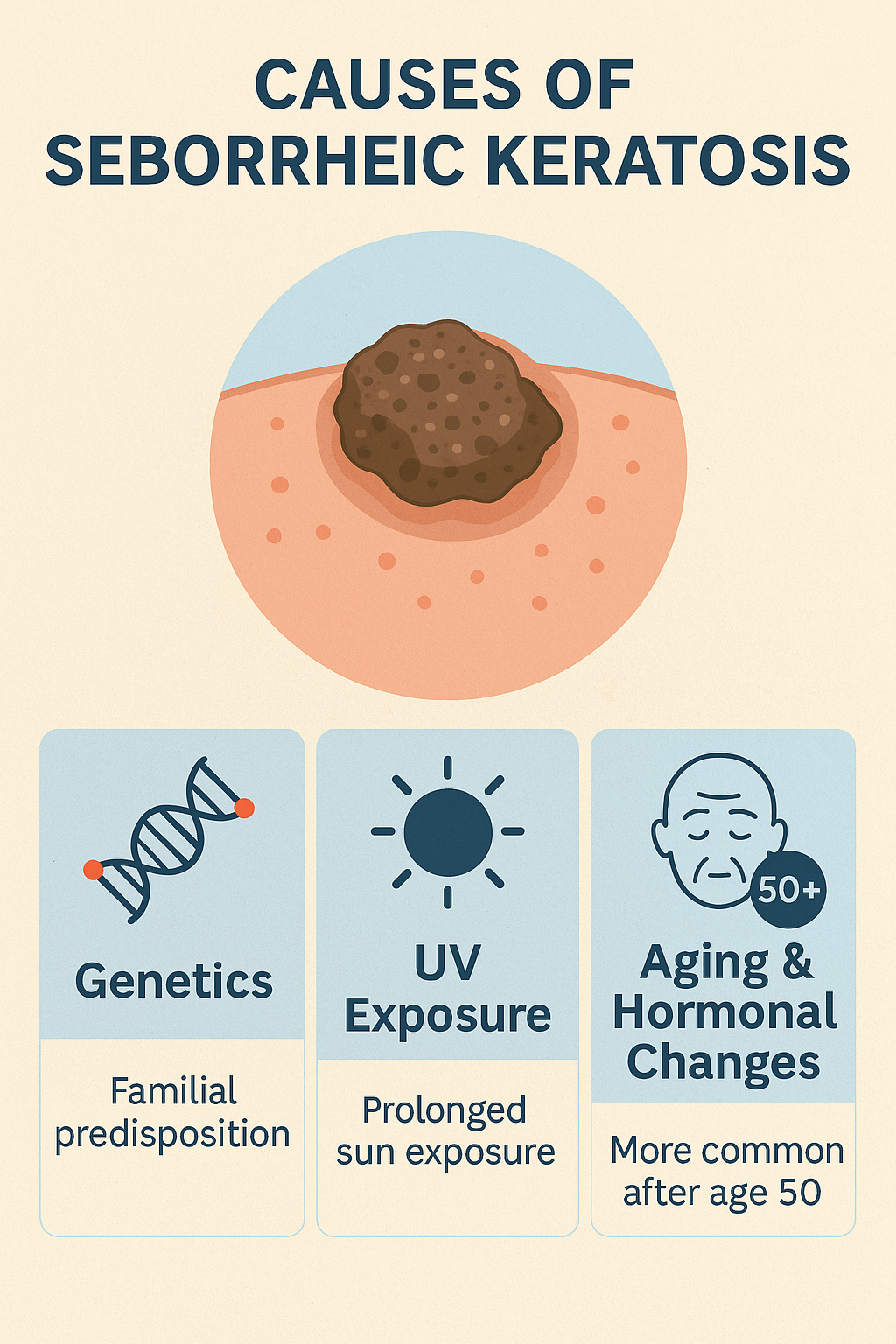
Seborrheic keratoses are commonly safe and do not need therapy unless they end up being bothersome or cosmetically undesirable. In such situations, they can be eliminated through various approaches, consisting of cold (cryotherapy), scuffing (curettage), or burning (electrocautery). The seborrheic keratosis, which is ubiquitous throughout all populaces, is a benign lump of the skin. Seborrheic keratosis are amongst the top 20 dermatologic problems treated by skin doctors.
Usual Attributes Of Seborrheic Keratosis:
What happens if seborrheic keratosis is left neglected?
Seborrheic keratoses are harmless and not infectious. They do not need therapy, however you may make a decision to have them eliminated if they end up being irritated by garments or you do not like how they look.
Call today for an examination to review your seborrheic keratosis. Free to everyone, these products educate youths concerning common skin problem, which can avoid misconception and intimidation. Treatment options for seborrheic keratosis emphasis generally on eliminating the developments if they are creating discomfort or affecting one's look. Different techniques such as cryotherapy (freezing), curettage (scratching), electrocautery (burning), and laser therapy might be used to eliminate the developments securely and efficiently. It is essential to keep in mind that not all instances of seborrheic keratosis sores require a biopsy. Our St. Louis skin doctors rely on their clinical uncertainty and proficiency to determine when this treatment is essential.
Although seborrheic keratoses are normally benign, they can often be misinterpreted for more severe conditions like malignant growths such as cancer malignancy. It is essential to have any type of suspicious sores examined by one our St. Louis dermatology team to rule out hatred. Seborrheic keratosis is a common non-cancerous skin growth normally older individuals. It is additionally called seborrheic verruca, aged protuberance, or basic cell papilloma, although it is not associated with growths or basal cell cancer. Seborrheic keratoses usually create on the face, upper body, shoulders, or back, however they can happen on various other parts of the body also. These growths are normally brownish, black, or tan and have a waxy or flaky texture.
For more details, contact our office today to
schedule your assessment. Seborrheic Keratoses start as hardly elevated, slightly bumpy, tiny plaques on the skin surface that may be either tinted or not tinted. In time, these become raised, warty plaques that appear as if "stuck on" to the skin surface area, and are darkly pigmented or perhaps black in darker people. These later developments might be anywhere from 1 to 6 centimeters, and seldom may be itchy or tender.
- In people with skin of shade, SKs have a tendency to be little and show up around the eyes and on the cheeks.
- What frequently identifies these growths from various other sores is a waxy, pasted-on-the-skin appearance.
- If it's something more significant, very early discovery makes a major distinction.
- They can differ in size from as small as a portion of an inch to larger than an inch.
- It is necessary to have any suspicious lesions evaluated by one our St. Louis dermatology team to eliminate hatred.
Skin Cancer Cells
Although it's common, exact info about acne can be scarce. After eliminating the seborrheic keratosis, your medical professional might execute a biopsy on it to look for skin cancer. People who have yet to reach their 50s are less most likely to establish seborrheic keratosis than those that more than that age range. Nevertheless, the early stages of the development can start showing up earlier. Those that have moms and dads or grandparents with seborrheic keratosis are extra likely to obtain them when they are older.
If you just have one visibible actinic keratosis, we might suggest removal through freezing, light therapy, or homepage (
cryosonic.bcz.com post to a company blog) an easy procedure. An actinic keratosis or AK is a rough, completely dry, flaky spot or growth that forms on the skin. An AK types when the skin is terribly damaged by ultraviolet (UV) rays from the sunlight or indoor sun tanning. Seborrheic keratosis is a noncancerous skin problem that typically creates with age.
Have you seen brown, black, or tan warty-like scaly bumps on your skin? Possibilities are, you might be dealing with seborrheic keratosis, a common noncancerous skin lesion. These growths can appear on various parts of your body, such as the breast, back, or scalp. Seborrheic keratoses are dark skin developments that shows up in their adult years.
Tips For Decreasing Scarring After Skin Cancer Surgical Procedure
It also might look like a barnacle affixed to a ship. Either way, SKs tend to have that stuck-on-the-skin look. Some clients ask their skin doctor to get rid of SKs that are big, irritated by clothes or fashion jewelry, or considered unsightly. Talk to your insurance company before asking your skin specialist to eliminate an SK, as this may be taken into consideration an optional cosmetic treatment that is not covered by your carrier.